Year 12 history and economics trip to Berlin
Year 12 history and economics trip to Berlin
Year 12 history and economics students recently enjoyed an enriching and thought-provoking visit to Berlin, exploring key themes from both A level courses through first-hand experiences of Germany’s complex twentieth-century history and economic development. 
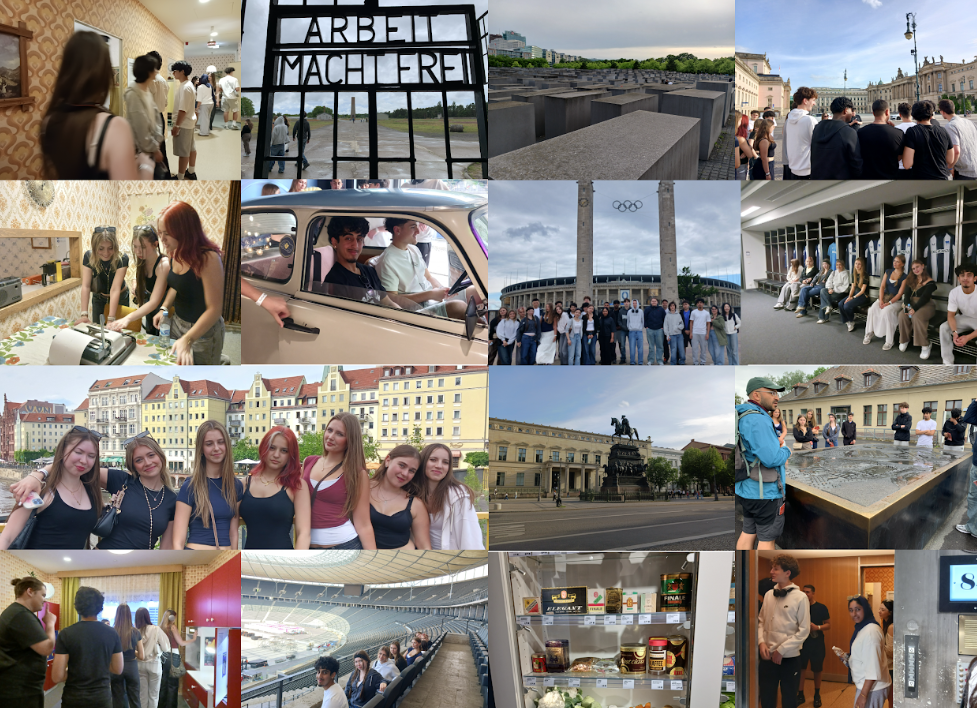
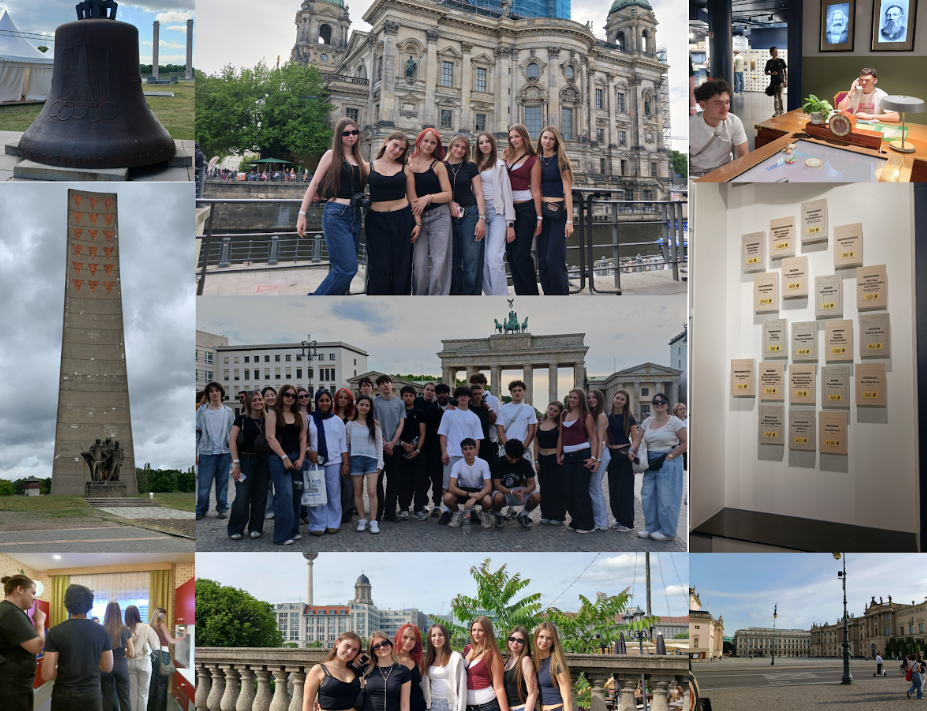
The visit began with a focus on Nazi Germany and the development of dictatorship and ideological control. At Bebelplatz, the site of the 1933 book burnings, students considered the significance of censorship, propaganda and the suppression of opposition in the Nazi consolidation of power, reflecting on how control of ideas underpinned the regime. This was followed by the Memorial to the Murdered Jews of Europe, which offered a powerful and sobering insight into the Holocaust and deepened understanding of Nazi racial policy and persecution, reinforcing classroom study and NEA preparation. The day concluded at the DDR Museum, where attention shifted into the post-war period as students examined everyday life in communist East Germany and experienced the realities of a centrally planned economy, supporting their understanding of different economic systems.
The next stage of the trip developed students’ understanding of dictatorship, propaganda and Cold War tensions. A visit to Sachsenhausen Concentration Camp Memorial was a particularly powerful and reflective experience, allowing students time on site to consider the reality of Nazi repression. Moments of quiet reflection encouraged a deeper engagement with how state terror operated and how fear was used to maintain control, strengthening their understanding of Nazi Germany as a totalitarian regime. This was followed by the Berlin Olympic Stadium, where students explored how the Nazi regime used sport and international events as propaganda to project strength and modernity, reinforcing ideas about image-building and ideological messaging within the Nazi state. The visit also provided an economic dimension through consideration of large-scale government investment, infrastructure and long-term capital development.
The day ended at the Palace of Tears, a former border crossing between East and West Berlin, where students explored the lived reality of Cold War division and the contrasting political and economic systems that shaped everyday life on either side of the Wall.
The final stage of the visit focused on Cold War division and Germany’s path to reunification. At the East Side Gallery, students reflected on the lasting legacy of the Berlin Wall and the impact of separation on communities and identity. The visit concluded at the Reichstag, home of the German Parliament, where students considered the development of modern German democracy following the collapse of both Nazi dictatorship and communist rule, and the broader transition towards political stability and economic integration.
Across the trip, the economics curriculum was brought to life through direct comparison of free market and centrally planned systems, particularly in East and West Germany. Students were able to see how central planning shaped incentives, production and living standards, while contrasting this with the growth, efficiency and rising prosperity associated with West Germany’s economy. Government spending and supply side policies were also evident in the development and continued use of sites such as the Olympic Stadium, including its renovation for major international events and tourism.
For history students, the visit deepened their understanding of Nazi Germany by linking ideology, propaganda, and control to everyday life under the regime. It helped them see how dictatorship operated in practice and strengthened their grasp of how and why such a system was able to sustain power. Overall, the visit provided a valuable opportunity to bring classroom learning into a real-world context, deepening students’ understanding of both subjects and giving greater depth to their study of twentieth-century political and economic change.